Zone 8 is one zone with two very different personalities. On the 2023 USDA map it covers most of the Carolinas, Georgia, Alabama, Mississippi, and Arkansas, north-central and West Texas (Dallas–Fort Worth, Waco, El Paso), Memphis and Chattanooga, and Norfolk–Virginia Beach. Out west, it's the Willamette Valley (Salem, Eugene, Corvallis), the Puget Sound lowlands around Tacoma and Olympia, and Oregon's Rogue Valley around Medford. Both halves share the same winter lows — 10 to 20°F — and almost nothing else.
The 2023 update moved a lot of gardens. Raleigh, Charlotte, Greensboro, Memphis, and Chattanooga climbed from Zone 7 into 8a, while Austin, Seattle, downtown Portland, Savannah, and Mobile warmed out of Zone 8 into 9a. If you last checked years ago, look up your ZIP code again, then find your frost dates with the free Old Farmer's Almanac tool. How frost dates drive everything below is explained in our one-chart planting guide.
Zone 8 at a glance: two climates, one zone
| Fact | Southeast & South | Pacific NW valleys |
|---|---|---|
| Winter low | 10 to 20°F (8a: 10…15, 8b: 15…20) | Same |
| Average last spring frost | Early March to early April (8b ≈ mid-March, 8a ≈ early April) | Mid-to-late April (cold pockets: early May) |
| Tomatoes go outside | Early-to-mid April | May, once soil is 60°F+ |
| Average first fall frost | Late October to late November | Mid-to-late October |
| Frost-free season | ~205–265 days | ~150–210 days |
| July average high / low | ~90–97°F / 70–78°F | ~78–84°F / 51–55°F |
| Summer rain (June–August) | ~8–15 inches | ~2–3 inches |
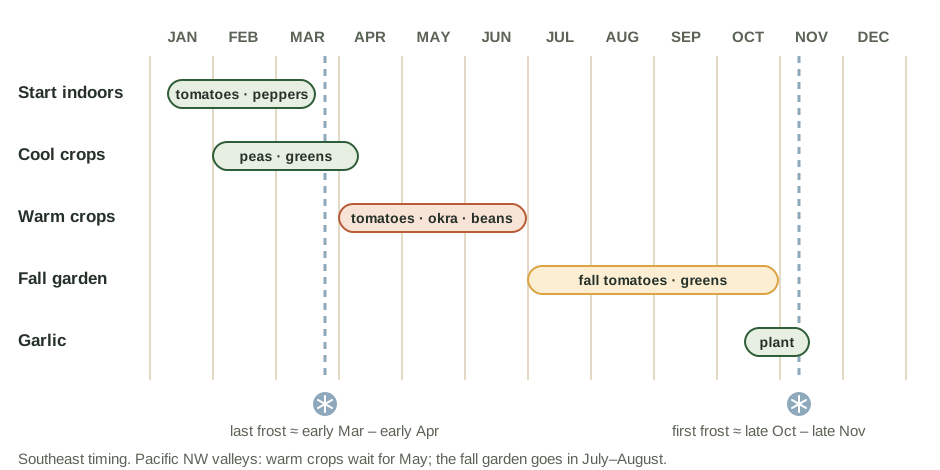
Same zone, very different calendars: the Almanac puts the last spring frost at March 9 in Dallas, April 3 in Raleigh, and April 25 in Eugene, Oregon. Its dates come from 1991–2020 NOAA climate normals, so they're a touch more cautious than Virginia Tech's 8a/8b tables (8a: April 1–15, 8b: March 15–April 1). The Southeast's problem is summer heat; the Northwest's is summer coolness. This calendar leads with Southeastern timing and flags the Northwest differences month by month.
January — plan and start the seed trays
- Get seed-starting trays ready this month; University of Georgia Extension starts tomatoes, peppers, and eggplant indoors in early February.
- In the warmest 8b spots, cabbage and broccoli plants, collards, and lettuce can go out from mid-January (LSU AgCenter's north Louisiana guide).
- Pacific Northwest: nothing much grows — Washington State University notes growth all but stops from about November 1 to February 10, when days are shorter than 10 hours. It's catalog season.
February — the cool-season start
- Direct sow: garden peas from February 10 in 8b and February 20 in 8a, plus spinach, collards, kale, radishes, turnips, and mustard (Virginia Tech's 8a/8b windows).
- Plant potatoes from about February 20 in 8a (earlier in 8b) through early April.
- Onions: sets go in from mid-to-late February — and choose short-day types. Clemson Extension is blunt that long-day onions can't be grown successfully in the South.
- Start seeds indoors: peppers and eggplant need about 8 weeks to transplant size, tomatoes about 6 (UGA).
- Pacific Northwest: peas can go in from February (Oregon State Extension's planting chart runs February to May).
March — transplants and patience
- Set out broccoli and cabbage transplants from March 1 in 8a (late February in 8b), and head lettuce from early March.
- Make second sowings of turnips, mustard, radishes, and green onions, and harden off your tomato seedlings (UGA).
- 8b gardens usually see their last frost by mid-March, but 8a can still freeze into early April — the warm March afternoons are a trap for tomatoes.
- Pacific Northwest: broccoli and onions go in, and lettuce gets started indoors. Oregon gardeners grow long-day onions, the opposite of the South.
April — the main planting month
- Transplant tomatoes from April 1 in 8b and April 10 in 8a, with peppers and eggplant from April 10 (Virginia Tech).
- Direct sow snap beans, sweet corn, cucumbers, and summer squash; okra from mid-April; Southern peas and sweet potato slips from about April 20.
- Plant beans, corn, and squash again 2–3 weeks later for a steady harvest instead of a glut (UGA).
- Pacific Northwest: sow potatoes, carrots, beets, and lettuce. Tomatoes still wait.
May — succession in the South, tomatoes in the Northwest
- Southeast: a third planting of beans, corn, and squash; okra and sweet potatoes thrive as nights warm.
- Pacific Northwest: this is tomato month. Oregon State Extension plants tomatoes around May 1–10 in most of western Oregon, into soil of at least 60°F (65–70°F is ideal), and WSU waits for nights that stay above 55°F. Choose varieties that ripen in 75 days or less — WSU King County trials liked 'Sungold', 'Juliet', 'Oregon Spring', and 'Stupice'.
- Okra and sweet potatoes aren't recommended for the western Oregon valleys — there isn't enough summer heat.
June — heat management
- Plant sweet potatoes and a second round of Southern peas (UGA).
- Expect tomatoes to stop setting fruit in the hottest stretch. Mississippi State and Clemson Extension both link it to days above about 90°F and warm nights in the 70s. Heat-set varieties help — Clemson lists 'Arkansas Traveler', 'Homestead 24', 'Solar Fire', and 'Florida 91'.
- Mulch deep and water in the morning.
- Pacific Northwest: start winter kale and collard transplants (June–August, per the PNW 548 winter-garden guide).
July — the second tomato season
- Southeast: transplant fall tomatoes between July 1 and August 10 (Virginia Tech); UGA says get them in by July 20. They ripen in mild fall weather, after the summer heat that stops fruit set.
- Start planning the fall garden and clear finished rows right away.
- Pacific Northwest: the winter garden starts now. Transplant sprouting broccoli, winter cabbage, and winter cauliflower from mid-July to early August.
August — fall garden setup
- Start broccoli, cabbage, collard, and kale transplants in half shade to set out in September (UGA).
- Sow carrots from August 1 to September 10, snap beans until about August 20 in 8a, and cucumbers and squash by August 31 (pick downy-mildew-resistant varieties).
- UGA's fall timing rule: count back from your first frost by the days to maturity plus 18 days. Our August fall-garden guide uses slightly more padding.
- Pacific Northwest: sow spinach for overwintering. WSU calls September 15 generally the latest seeding date for winter vegetables in western Washington.
September — the big fall sowing month
- Set out broccoli (through September 20) and cabbage (through September 10).
- Sow: beets and turnips through October 1, lettuce and mustard through mid-to-late October, radishes from September 10, and spinach from September 20 (Virginia Tech, 8a).
- Fall peas are a judgment call: Virginia Tech doesn't recommend them, while Clemson and Mississippi State list fall windows. A short row is a fair experiment.
October — garlic month
- Plant garlic from mid-October to mid-November — Virginia Tech gives October 15–November 15 for both 8a and 8b. Southern gardens do best with softneck types; UGA notes 'California Early' did well in its trials. Depth, spacing, and the no-bend method are in our garlic planting guide.
- Keep sowing spinach (until November 1), plus lettuce, mustard, and radishes into the third week of the month.
- Clemson's October advice for the Midlands: plant garlic, onions, and shallots, and cover empty beds with shredded leaves or a crimson clover cover crop.
- Pick mature green tomatoes and peppers before the first frost and refresh the mulch (UGA).
- Pacific Northwest: plant garlic (Oregon State says September through November), dig and store potatoes cool and dark, and ripen green tomatoes indoors.
November and December — the winter garden
- Last call for garlic by mid-November.
- Row covers and cold frames stretch the fall harvest by two to four weeks (Virginia Tech). NC State puts spinach hardiness at about 8–12°F and kale at 10–15°F, so covered greens often carry through the winter.
- Soil test, add lime if the test calls for it, and order next year's seed in December (UGA).
- Pacific Northwest: transplant overwintering onions (October–November), sow fava beans around the second week of November (WSU), spread 3–4 inches of leaves over empty beds, and set cold frames over winter rows (Oregon State).
The no-bend view of Zone 8
Zone 8 hands you a long season. The easiest way to enjoy it is to raise the garden to a comfortable working height:
- Southeast: work the garden early, and keep it at waist height. Southern summers are hot and humid. A waist-high bed means less time bent over the soil in July, and a soaker hose on a timer handles most of the watering.
- Raised beds for wet winters. UGA recommends raised beds for winter plantings. In the Northwest, where Salem gets around 19 inches of rain from November through January, they keep winter greens out of standing water.
- Containers for the in-between seasons. Pots of fall tomatoes or winter greens can follow the sun. WSU suggests raised beds or a spot by a south-facing wall to give Northwest tomatoes extra warmth.
- The setups are covered in our raised bed height guide and container vegetable guide.
Put your Zone 8 dates on paper
The free Printable Garden Planner Kit includes a fill-in planting chart, a fall-planting worksheet, frost-date tables for zones 3–10, and bed grids — all in large, readable print.
Frequently asked questions
When should I plant tomatoes in Zone 8?
In the Southeast, transplant in early-to-mid April — Virginia Tech gives April 1 in 8b and April 10 in 8a — after starting seeds indoors about 6–8 weeks earlier. A second crop set out July 1 to August 10 ripens in the fall. In the Pacific Northwest valleys, wait until May, when soil reaches 60°F and nights stay above 55°F.
What is the last frost date in Zone 8?
It depends on where your Zone 8 is. In 8b it's typically mid-March (Dallas March 9, Jackson March 13); in 8a, early April (Raleigh April 3, Charlotte April 5); in the Pacific Northwest valleys, mid-to-late April (Salem April 13, Eugene April 25). Look up your own ZIP code with the Old Farmer's Almanac tool.
What can I plant in Zone 8 in October?
Garlic (mid-October to mid-November), plus spinach, lettuce, mustard, radishes, and turnips, and transplants of collards and kale. Short-day onions and shallots go in now in much of the Southeast. In the Pacific Northwest, October is for garlic, cover crops, and overwintering onion transplants.
When do I start a fall garden in Zone 8?
In the Southeast, in July: set out fall tomatoes by mid-July, start broccoli and cabbage transplants in August for September planting, and sow roots and greens from August through October. In the Pacific Northwest, plant the winter garden in July and August — WSU calls September 15 generally the latest seeding date.
What's the difference between Zone 8a and 8b?
Five degrees of winter low: 8a averages 10 to 15°F at its coldest, 8b 15 to 20°F. For vegetables, 8b springs usually run about two weeks ahead of 8a — Virginia Tech's frost tables put 8b's last frost at March 15–April 1 and 8a's at April 1–15. The 2023 map moved many cities, so re-check yours by ZIP code.
Sources
- Virginia Tech Cooperative Extension — Home Garden Vegetable Planting Guide (zones 8a/8b)
- University of Georgia Extension — Vegetable Garden Calendar (Circular 943)
- University of Georgia Extension — Production and Management of Garlic, Elephant Garlic, and Leek
- Clemson Cooperative Extension — Planning a Garden (HGIC 1256)
- Clemson Cooperative Extension — Tomato Diseases & Disorders (HGIC 2217)
- Clemson Cooperative Extension — This Month in Your Garden: October 2026
- Mississippi State University Extension — Mississippi Vegetable Gardener's Guide (P3616)
- Mississippi State University Extension — Why Don't Tomatoes Produce Fruit in Late Summer?
- NC State Extension — Season Extension
- Oregon State University Extension — Vegetable Gardening in Oregon (EC 871)
- Oregon State University Extension — Grow Your Own Tomatoes and Tomatillos (EC 1333)
- Pacific Northwest Extension — Winter Vegetable Production West of the Cascades (PNW 548)
- Washington State University Extension — PNW Gardener's Handbook, Vegetable Gardening
- Washington State University Extension, King County — Growing Tomatoes
- The Old Farmer's Almanac — Frost Dates Calculator
- NOAA National Centers for Environmental Information — U.S. Climate Normals (1991–2020)
- USDA Agricultural Research Service — Plant Hardiness Zone Map (2023)