Every planting calendar you've ever seen — the app, the seed catalog, the chart on the potting-shed wall — is the same table wearing different clothes. Each crop is planted a set number of weeks before or after your last spring frost. Learn that one idea, look up your own frost date once, and you can time any vegetable in any zone that gets frost without memorizing a single calendar date.
This is the master chart we use, based on the Farmers' Almanac seed-starting guide and university extension timing (Purdue's Indiana planting calendar is the backbone). Tape it inside a cupboard door; it doesn't expire.
First, find your two dates
Your garden runs on two dates:
- Last spring frost — the average date after which freezing nights stop. Everything in this article counts from it.
- First fall frost — the average date freezing nights return (that one runs the fall garden).
Look both up by ZIP code with the Old Farmer's Almanac frost-date tool — it's free and based on 30-year climate normals from U.S. weather stations. Write the dates on the chart and you're done with research forever (or until you move).
A quick honesty note: frost dates are averages, not guarantees. Roughly speaking there's still about a one-in-three chance of a frost after the "last frost date," which is why tender crops wait a week or two past it. Weather forecasts get the final vote.
Frost date vs. USDA zone — they're different tools
This trips up almost everyone, so let's untangle it:
- Your USDA hardiness zone (from the 2023 map at planthardiness.ars.usda.gov) describes your average coldest winter night. It answers: will this rosebush survive winter here? It says nothing directly about frost timing.
- Your frost dates describe when freezing nights end and begin. They answer: when do I plant the lettuce?
Two towns can share a zone but differ by weeks in frost dates (coastal vs. inland, valley vs. hilltop). Kansas City and Columbus, Ohio are both Zone 6b, yet the Almanac puts their last spring frost on April 10 and April 27. The 2023 map itself was rebuilt from 1991–2020 data at 13,412 weather stations, and about half the country shifted a half zone warmer — worth re-checking if you last looked years ago. Use the zone for buying perennials, shrubs, and bulbs; use frost dates for scheduling the vegetable garden. For vegetables, the frost date does the work.
The chart: weeks before and after last spring frost

Direct-sow seeds outdoors:
| When (vs. last spring frost) | Sow these outdoors |
|---|---|
| 4–6 weeks before | Peas, spinach, leaf lettuce, radishes, kale, arugula, mustard & Asian greens, turnips, onion sets |
| 2–4 weeks before | Beets, carrots, Swiss chard, potatoes (seed pieces), kohlrabi |
| At last frost, soil warming | Bush & pole beans, sweet corn, cucumbers, summer squash (cucumbers and squash sprout best once soil passes 65°F) |
| 1–2 weeks after (soil warm) | Melons and winter squash from seed |
| 2–3 weeks after (soil 65°F+) | Basil, okra, sweet potato slips |
Transplants (started indoors or bought as plants):
| Crop | Start seeds indoors | Set plants outside |
|---|---|---|
| Broccoli, cabbage, cauliflower | 6–10 weeks before last frost (4–6 weeks before you set them out) | 2–4 weeks before last frost |
| Lettuce (heads) | 4–6 weeks before | Around last frost |
| Tomatoes | 6–8 weeks before | 1–2 weeks after last frost |
| Peppers, eggplant | About 8 weeks before | 2 weeks after, once nights stay above ~55°F |
The pattern behind the whole table: the cabbage-and-lettuce crowd likes cool soil and shrugs off frost, so it goes early. The tomato-and-squash crowd is killed by one freezing night and sulks in cold soil, so it waits until the danger has clearly passed.
A worked example
Say your last frost is May 5 (typical of the cooler parts of Zone 6):
- Peas and spinach: 4–6 weeks before → sow March 24 – April 7
- Carrots and beets: 2–4 weeks before → sow April 7–21
- Tomato seeds indoors: 6–8 weeks before → start March 10–24
- Beans and corn: at frost date → sow around May 5
- Tomato plants outside: 1–2 weeks after → plant May 12–19
Five dates, one anchor. That's the entire system.
Two refinements worth knowing
Soil temperature is the tiebreaker. Dates get you close; the soil gets the final say, especially in a cold, wet spring. Seeds rot in soil that's too cold: peas want about 45°F and up, beans about 60°F, squash and melons 65–70°F. An inexpensive soil thermometer settles arguments the calendar can't. (Raised beds and containers warm earlier than open ground — one more reason we like them; see our raised bed guide.)
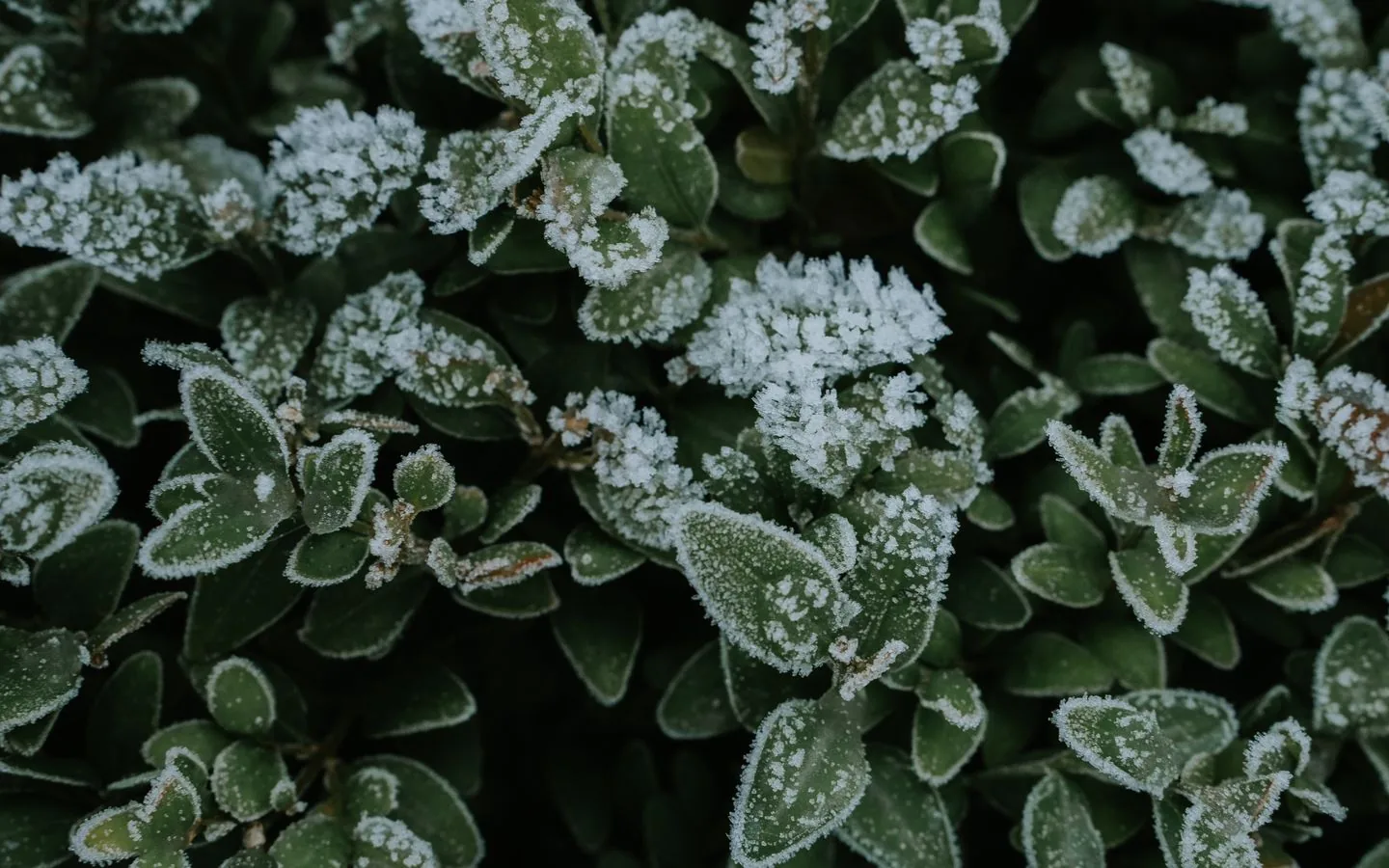
Frost isn't freeze. A light frost (around 29–32°F) whitens the lawn and takes out basil and tomatoes, but leaves lettuce, peas, and the cabbage family unbothered. A hard freeze (below about 28°F, per the National Weather Service) ends the season for all but the toughest crops. Iowa State Extension's groupings put beets, carrots, lettuce, and spinach in the "upper 20s" and kale, cabbage, and turnips in the "mid to low 20s." Knowing the difference saves a lot of unnecessary panic — and a few salvageable salads.
The same trick runs your fall garden
Count backward from your first fall frost — days to maturity, plus a harvest window, plus a couple of "fall factor" weeks for slower autumn growth — and you know the last sowing date for any crop. We walk through that math, zone by zone, in what to plant in August, and the Planner Kit includes a worksheet page that does the counting for you.
Find your zone's calendar
Prefer the whole year laid out for your zone, month by month? We're building a calendar page for every USDA zone, starting with Zones 6, 7, and 8:
- Zone 6 Planting Calendar: What to Plant, Month by Month
- Zone 7 Planting Calendar: What to Plant, Month by Month
- Zone 8 Planting Calendar: What to Plant, Month by Month
- More zones are on the way.
This chart, on your fridge
The free Printable Garden Planner Kit includes this planting chart with a column for your own dates, frost-date tables for zones 3–10, and a fall-planting worksheet — in large print, made to be penciled on, not squinted at.
Frequently asked questions
How accurate are frost dates?
They're 30-year averages, so treat them as a bell curve, not a fence. There's still roughly a 30% chance of frost after your average last-frost date. Cold-hardy crops don't care; for tomatoes and peppers, wait the extra week or two and watch the 10-day forecast.
What if a surprise frost is forecast after I've planted?
Cover tender plants overnight with an old bed sheet, upside-down buckets, or milk jugs with the bottoms cut out — on before dusk, off in the morning once it's above freezing. Hardy crops (peas, lettuce, brassicas, onions) can be left alone.
Is my USDA zone the same as my frost date?
No. The zone measures average winter minimum temperature (for choosing perennials); frost dates measure when freezing nights end and return (for scheduling annual vegetables). You need your ZIP-code frost dates, not just your zone number, to use planting charts properly.
When should I start seeds indoors?
Count back from your last frost date: tomatoes 6–8 weeks before it (they go outside 1–2 weeks after), peppers and eggplant about 8 weeks, broccoli and cabbage 6–10 weeks (they go out 2–4 weeks before the frost date). Starting too soon makes leggy, root-bound plants — later is safer than earlier.
Do raised beds and containers change the dates?
A little, in your favor. The soil in them drains and warms earlier than open ground in spring, and with plastic mulch or a row cover, Kansas State Extension notes you can plant up to two weeks sooner. Frost dates themselves don't move — air is air — so tender crops keep their schedule.
Sources
- Farmers' Almanac — Seed Starting Chart: When to Start Every Vegetable
- The Old Farmer's Almanac — Frost Dates Calculator
- USDA Agricultural Research Service — Plant Hardiness Zone Map (2023)
- Iowa State University Extension — Fall Planting of Vegetables
- Purdue Extension — Indiana Vegetable Planting Calendar (HO-186-W)
- Iowa State University Extension — Growing Broccoli in the Home Garden
- Kansas State Research and Extension — Raised Bed Gardening (MF2134)
- National Weather Service — Frost and Freeze Warnings
- USDA ARS — USDA Unveils Updated Plant Hardiness Zone Map (2023)