August feels like the end of the garden year. It's actually a second beginning. Gardeners call it the "second spring": the same cool-season crops you sowed in April — lettuce, spinach, radishes, kale, beets — go in again in August and mature in the crisp weather they love. Many taste sweeter after a light frost than they ever did in June.
Reading this in September or October? Most sowing windows in zones 5–6 have closed, but it's garlic time (see our garlic planting guide), and zones 8–9 are in prime cool-season planting.
And here's the part we appreciate most: a fall garden is gentler on the gardener. The weeds slow down, the watering eases as temperatures drop, and the harvest arrives in pleasant sweater weather instead of July heat. If you've got a raised bed or a few big pots freshly emptied of spring crops, this is the easiest planting window of the year.
The one date that runs the show
Fall planting is spring planting in reverse. Instead of counting forward from the last spring frost, you count backward from your first fall frost.
Look your date up by ZIP code with the Old Farmer's Almanac frost-date tool — it takes a minute. For rough planning, typical first-frost windows by zone look like this:
| USDA zone | Typical first fall frost |
|---|---|
| Zone 5 | October 1–15 |
| Zone 6 | October 5–25 |
| Zone 7 | October 15 – November 10 |
| Zone 8 | November 1–25 |
| Zone 9 | Mid-November to late December (some years, none) |
Treat these as planning ranges, not promises — your local date can sit a week or two either side, and an early cold snap is always possible.
The fall math (easier than it sounds)
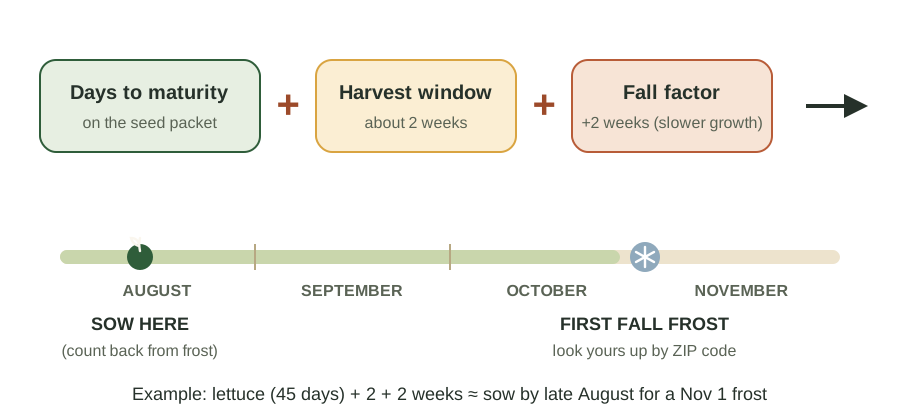
For each crop, take the days to maturity on the seed packet, then add two paddings:
- A harvest window — about 2 weeks, so everything isn't racing the frost on one weekend.
- A "fall factor" — about 2 more weeks, because fall days get shorter and cooler and plants grow slower than the packet's spring-tested number. This adjustment comes straight from the horticulturists: Nebraska Extension's fall formula calls it a "Fall Factor" of about 14 days, and Iowa State Extension and the Garden Professors build the same slowdown into their fall planting math.
Example: leaf lettuce at 45 days + 14 (harvest) + 14 (fall factor) = 73 days. With a November 1 frost, sowing by roughly August 20 gets you salads through October — and lettuce shrugs off the first light frosts anyway.
Do that arithmetic once per crop, or let the fall worksheet in our Printable Garden Planner Kit do it for you.
What to sow in August, by group
Iowa State Extension sorts fall crops by how much cold they can take — which is exactly the order that matters in fall:
Fast greens — the sure bets everywhere (zones 5–9)
Leaf lettuce, spinach, arugula, Asian greens (bok choy, tatsoi, mizuna), and radishes. All mature in about 25–60 days (baby leaves sooner), all tolerate light frost, and several get sweeter for it. These are the crops to reach for if your August start is a late one — radishes and arugula can go from packet to plate in a month.
Roots — early August up north, all month further south
Beets and carrots are semi-hardy (they'll take temperatures in the upper 20s); turnips are hardier still, into the mid-20s. Beets and turnips: the first half of August in zone 5, all month in zone 6. Carrots need a longer runway — sow by late July in zones 5–6 (or a fast baby variety in early August); in zones 7–9 you have August and beyond. Fall carrots left in the ground through a few frosts are famously the sweetest of the year.
The kale-and-cabbage family — frost improves them
Kale and collards sown in August will feed you until Thanksgiving nearly everywhere; they're hardy into the low 20s. Broccoli and cabbage need a longer runway, so in zones 7–8 set out transplants (garden centers stock them in late summer) rather than seed. Kohlrabi, one of the quicker cabbage cousins (55–70 days), works from seed in most zones.
Bush beans and peas — the frost-tender gamble
Beans are tender — the first real frost ends them — but a 50–55-day bush bean sown by early August still ripens in zones 7b–8; in zones 6 and 7a the cutoff is late July (Virginia Tech's fall windows end July 15–August 1 there). Fall peas are a gamble even in zones 7–8: August heat stalls them and frost nips the pods, and Virginia Tech doesn't recommend them. If you try, sow a fast snap or snow pea in early August. In zone 9, peas are a winter crop — sow from November. In zone 5, put the space into greens instead.
Zone 9 plays by different rules
If you're in zone 9, August is still your hottest stretch — too hot to sow most cool-season crops outdoors. Use the month to start broccoli, cabbage, and lettuce seed in trays somewhere bright but shaded (or indoors), then transplant in late September when the furnace switches off. Your "fall garden" will cruise straight through winter.
Zone-by-zone cheat sheet
| Zone | Sow directly in August | Transplants · what to skip |
|---|---|---|
| 5 | Lettuce, spinach, radishes, arugula, turnips, kale; beets in early August | Skip beans, carrots, and broccoli from seed |
| 6 | All of the above, plus beets and turnips all month; spinach from mid-month | Broccoli and cabbage transplants (early Aug). Skip bush beans (unless sown by late July) and peas |
| 7 | Everything for zone 6, later into the month; carrots early-to-mid Aug; bush beans by Aug 1 (7a) or Aug 10 (7b) | Broccoli, cabbage, cauliflower transplants. Fall peas are a gamble |
| 8 | Greens, roots, kale and collards, bush beans (by about Aug 20) | Broccoli and cabbage transplants; tomato transplants by early Aug |
| 9 | Hold off — too hot; sow greens late Aug at earliest | Start brassicas & lettuce in trays in August, plant out late Sept |
Want this August window in the context of the whole year? We keep month-by-month calendars for Zone 6, Zone 7, and Zone 8.
Getting seeds up in hot August soil
The one genuine challenge of the second spring: sowing cool-weather seeds into 90-degree soil. Lettuce, peas, and spinach won't germinate well once soil passes 85°F, per Nebraska Extension. Extension fixes from Iowa State and Nebraska, plus one of ours:
- Water the furrow before sowing, then keep the seed row consistently moist — a daily sprinkle until sprouts appear.
- Shade the row with a light mulch, a board propped on bricks, or a strip of shade cloth for the first week. Lettuce and spinach germinate poorly in hot soil; shade drops the temperature just enough.
- Pre-sprout indoors: roll seeds in a damp paper towel inside a food bag for 2–3 days until they just crack, then plant. Works wonders for spinach.
- Our no-bend addition: sow the fall garden in raised beds or containers. August sowing means daily attention to moisture for a week or two — far more pleasant at counter height than at ankle height. If your pots just finished spring lettuce, refresh with a scoop of compost and re-sow the same containers (see our container vegetables guide).
Stretching the season past the first frost
A frost date isn't a finish line. An old bed sheet or floating row cover thrown over the bed on cold nights (propped so it doesn't crush plants, removed once the morning warms past freezing) buys two to four weeks of extra harvest, per Virginia Cooperative Extension. And kale, collards, carrots, and spinach don't just survive light frost — they convert starches to sugars and genuinely improve. Some of the best salads of our year come out of October.
Want the full timing system behind all of this? It's one simple chart: when to plant vegetables by frost date.
Let the worksheet do the counting
The free Printable Garden Planner Kit includes a fall-planting worksheet, frost-date tables for zones 3–10, and a large-print planting chart you can fill in with a pencil.
Frequently asked questions
Is August too late to plant tomatoes?
In zones 5–7, yes — a tomato set out in August can't ripen a worthwhile crop before frost. Give that sunny spot to greens instead. In zone 8, early August is the last call for transplants; in zones 9–10, late-summer tomato planting for a fall crop is a real thing — choose fast, heat-set varieties.
What's the fastest vegetable I can plant in August?
Radishes — 25–35 days from sowing to eating. Arugula and baby leaf lettuce come in around 30–40 days. Sown in the first week of August, all three finish comfortably even in zone 5.
Do I really need to add "fall factor" days to the seed packet number?
Yes — add about two weeks (Nebraska Extension's "Fall Factor" is 14 days). Packet maturity dates assume lengthening spring days; in fall, shorter and cooler days slow everything down. It's the difference between harvesting in October and watching immature plants stall in November.
Will the first frost kill my fall garden?
Mostly no. Lettuce, spinach, beets, and carrots take temperatures in the upper 20s; kale, collards, cabbage, and turnips keep going into the low-to-mid 20s. Only frost-tender crops like beans end at first frost. Covers extend everything by weeks.
Can I plant garlic in August too?
Not in August. Garlic goes in around or just after your first frost — October to early November in zones 5–7, mid-October through November in zone 8, later still in zone 9 — so it roots without sprouting tall before winter. Order bulbs in late summer (favorites sell out), then plant in fall with our zone-by-zone garlic guide.
Sources
- Iowa State University Extension — Fall Planting of Vegetables
- The Garden Professors — Counting the Days to Maturity
- University of Nebraska–Lincoln Extension — Fall Vegetable Gardening (G1343)
- Virginia Tech Cooperative Extension — Home Garden Vegetable Planting Guide
- University of Florida IFAS Extension — Florida Vegetable Gardening Guide
- The Old Farmer's Almanac — Frost Dates Calculator