That's the quick version. Below we walk through each working height, what it costs you in soil and lumber, and the two measurements people forget — bed width and path width — which matter just as much once you stop kneeling.
Why bed height is the first decision, not an afterthought
Most raised-bed guides start with what you want to grow. We think that's backwards. Plants are flexible — the University of Georgia Extension says most garden crops need at least 10 inches of soil to thrive, and a bed of almost any height can give them that. Your back and knees are less flexible. So start with how you want to work — kneeling, perching, sitting, or standing — and the right height follows.
A useful test before you build anything: stand at your kitchen counter (usually 36 inches) and mime pulling weeds. Then try the same at a table (about 30 inches) and from a chair (working sideways at 18–24 inches). Whichever feels like something you could happily do for twenty minutes is your height.
The four working heights
11 inches — the classic kneeling bed
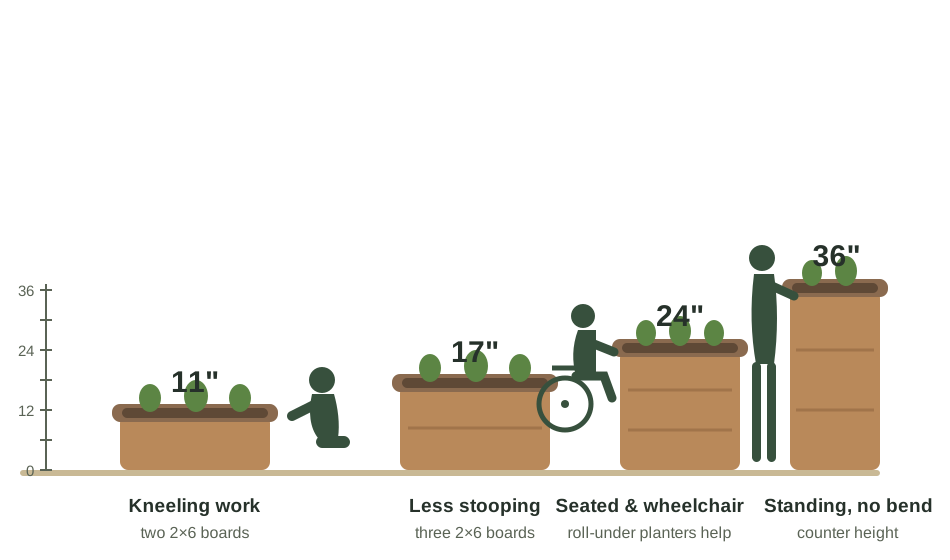
Two stacked 2×6 boards give you a bed about 11 inches tall. It's the cheapest to build and fill, drains well, and grows almost anything. But make no mistake: this is still ground-level gardening. You'll kneel or bend for every task. If kneeling is fine with a pad and something sturdy to hold while getting up, an 11-inch bed is a great value. If getting down is the whole problem, keep reading.
17 inches — noticeably less stooping
Three 2×6 boards stack to roughly 16½–17 inches. This height cuts the deep bending out of everyday tasks like harvesting greens, and the wide cap rail many people add doubles as a place to perch for a minute. It's a good compromise when you want easier gardening but aren't ready for the soil volume (and price) of a waist-high bed.
24 inches — the seated and wheelchair height
The University of Georgia Extension recommends about 24 inches tall for wheelchair access, and the same height works beautifully for gardening from a chair or rolling stool. Two things matter here:
- Keep it narrow. UGA suggests about 3 feet wide for adults when the bed must be reachable from a wheelchair (versus 4 feet, its general standard for adults).
- Mind your knees. A standard box bed meets your shins, so you'll work sideways. To roll under the bed like a table, look for elevated planters on legs with clearance below (the ADA standard for knee clearance under a work surface is at least 27 inches high) — a shallower trough (about 10 inches of soil) on a leg frame does the trick for greens and herbs.
30–36 inches — standing, no bending at all
A bed 36 inches off the ground helps avoid excessive bending over, as UGA puts it — true "counter-height" gardening. Most people find 30–36 inches lets them sow, weed, and harvest comfortably while standing upright. Oregon State Extension's rule of thumb for standing gardeners: the work surface should be no lower than your fingertips with arms relaxed. This is the height we'd point most gardeners toward if bending is the main thing pushing them out of the garden.
Two honest caveats:
- Soil volume gets serious. A 4×8-foot bed filled 36 inches deep holds over 3 cubic yards of mix. You can cut that dramatically — see the filling tips below.
- Watch the reach-up problem. If you're under about 5'4", a 36-inch bed plus tall plants (say, caged tomatoes) puts the harvest above your shoulders. Shorter gardeners are often happier at 30–32 inches.
Width and paths: the other half of "no-bend"
Height removes bending; width and paths remove stretching and shuffling.
- Reach. Plan around a comfortable reach of about 2 feet. A bed against a fence (one-sided access) should be no more than 2–3 feet wide. A bed you can walk around can be 4 feet — UGA's standard for adults.
- Length. Long beds mean long walks around them. Two 4-foot beds with a path between are friendlier than one 8-footer you have to circle.
- Paths. UGA recommends at least 12 inches between beds, 18–24 inches for comfortable access, and a full 4 feet wherever a wheelchair or garden cart needs to pass. Where a wheelchair has to turn around, plan for about 5 feet (the ADA's standard turning circle is 60 inches across). Firm, level surfaces (compacted fines, pavers) beat wood chips for wheels.
How deep does the soil actually need to be?
Per UGA, most garden crops need at least 10 inches of soil to thrive. That has a happy consequence: a tall bed does not need to be soil all the way down.
| What you're growing | Soil depth that keeps it happy |
|---|---|
| Lettuce, spinach, radishes, herbs | 6–10 inches |
| Bush beans, kale, chard, onions | 10–12 inches |
| Carrots, beets, peppers | 12 inches |
| Tomatoes, potatoes, deep roots | 12–18 inches |
Filling a tall bed without buying a truckload of soil
For a 24–36-inch bed sitting on open ground, fill the bottom half with coarse, free material: logs, branches, corn stalks, straw, fall leaves. It settles slowly, feeds the bed as it breaks down, and improves drainage. Top the last 12–18 inches with a quality raised-bed mix. Use only healthy material — skip diseased plants and wood, and keep black walnut leaves and hulls out — and top the bed up with compost as the wood breaks down. (Skip this trick for elevated planters with bottoms — they need lightweight potting mix throughout, both for drainage and so the frame isn't carrying half a ton.)
One more senior-friendly detail: add a cap rail — a flat board laid around the top edge. It gives you a seat, a spot for tools and a mug, and something solid to press on when you straighten up.
If a tall bed isn't in the cards
A 36-inch bed is wonderful; it is also furniture-sized and priced accordingly. Containers on a bench, table, or plant stand get you the same no-bend geometry for a fraction of the cost — a few 5-gallon pots at counter height will grow serious tomatoes. We cover the best crops for that setup in our guide to the easiest vegetables to grow in containers, and the timing side in the frost-date planting chart.
Plan your bed on paper first
Our free Printable Garden Planner Kit includes a large-print bed-planning grid, frost-date tables, and a planting chart — the planning side of this guide, ready for a pencil at the kitchen table.
Frequently asked questions
What is the best raised bed height to avoid bending completely?
30 to 36 inches — about counter height. At 36 inches, most adults can do every garden task standing fully upright. Gardeners under about 5'4" often prefer 30–32 inches so tall crops stay within reach.
What height should a raised bed be for a wheelchair?
About 24 inches tall, per University of Georgia Extension guidance, and no wider than about 3 feet if you'll reach from the side. For a roll-under design, choose an elevated trough planter on legs with knee clearance below.
How wide should a no-bend raised bed be?
Keep everything within about a 2-foot reach: up to 4 feet wide with access from both sides, 2–3 feet if only one side. Narrower is kinder to your shoulders — you should never need to lean a knee on the soil.
Do I have to fill a 36-inch bed entirely with soil?
No. Most vegetables need only 10–18 inches of good soil at the top. On open ground, fill the lower half with logs, branches, leaves, and straw, then finish with raised-bed mix. Expect some settling the first season and top it up.
Can I sit on the edge of my raised bed while I work?
Yes — build it for that. A bed 17–24 inches tall with a flat cap rail 6 or more inches wide makes a genuine garden bench. It's one of the easiest ways to take the strain out of weeding a long row.
Sources
- University of Georgia Extension — Raised Garden Bed Dimensions (Circular 1027-4)
- University of Wisconsin Horticulture Extension — Growing Vegetables in Containers
- Oregon State University Extension — Gardens Are for Everyone: Ideas for Accessible Gardening (EM 9403)
- University of Tennessee Extension — Building and Using Raised Beds (W346-E)
- NC State Extension Gardener — Accessible Gardening: Raised Beds, Containers, and Garden Tables
- U.S. Access Board — ADA Guide: Clear Floor Space and Turning Space
- Clemson Cooperative Extension — Hugelkultur Gardening