A few pots on a patio table can grow a surprising amount of dinner — and they meet you at hand height. No digging, no kneeling, no long rows to weed. If getting down to ground level (or back up again) is the part of gardening you'd happily skip, containers are the shortest path back into the hobby.
This guide covers the ten easiest vegetables we know for pots, the container sizes that actually work (undersized pots cause most beginner failures), and a few arrangement tricks that keep every plant within easy, upright reach.
Three things decide almost everything
Three things decide almost everything in a pot (the University of Wisconsin Horticulture Extension's container guide covers each one):
- Container size. Bigger is easier. A too-small pot dries out by lunchtime and starves roots. When in doubt, go up a size — more soil holds more water, which means less hauling of watering cans.
- Light. Fruiting crops (tomatoes, peppers, cucumbers, beans) want 6–8 hours of direct sun; leafy greens like lettuce and spinach can get by with 4–6, according to University of Tennessee Extension. Watch your patio through one sunny day before buying plants; it saves a season of guessing.
- Potting mix — not garden soil. Fill pots with a commercial potting mix: lightweight and well-drained. When you can, pick one that's pasteurized, which Wisconsin Extension says reduces the risk of soil-borne disease. Garden soil packs down like concrete in a pot.
One myth to retire while we're here: do not put rocks, gravel, or broken pot pieces in the bottom "for drainage." Wisconsin Extension is blunt about this — a coarse layer actually impedes water movement. A pot needs two things: drainage holes and good mix, top to bottom.
The 10 easiest container vegetables
1. Leaf lettuce
The gateway crop. Sprinkle seed in a wide, shallow pot, keep it moist, and you're cutting salads in about a month. Harvest the outer leaves and it keeps producing for weeks. In summer heat, move the pot to afternoon shade — one of the luxuries container gardeners have over everyone else.
2. Radishes
Ready in as little as three to four weeks, radishes are the fastest payoff in the vegetable world. Any pot at least 6 inches deep works. Sow a small pinch every 10 days or so instead of one big planting and you'll have a steady supply instead of a glut.
3. Green onions
Practically indestructible. Tuck sets or seedlings into any spare gap, snip the tops as needed, and they regrow. A 2-gallon pot keeps a kitchen supplied most of the season.
4. Swiss chard
The best-looking vegetable you can put in a pot — stems come in red, gold, and white. More heat-tolerant than lettuce and just as cut-and-come-again. One plant per 2-gallon pot, and it keeps going from early summer to hard frost.
5. Spinach
Quick, cold-tolerant, and happiest in the cool ends of the season — sow in early spring and again in late summer for fall salads. It bolts in midsummer heat; that's the crop, not you.
6. Bush beans
Skip the poles and trellises: bush varieties stand on their own and crop heavily over a few weeks. They want a 5-gallon container and full sun. Seeds go straight in the pot once nights are reliably warm — no transplants needed.
7. Cherry tomatoes (patio types)
The most rewarding pot crop there is. Choose a variety bred for containers — names like 'Patio', 'Bush', 'Tumbler', or anything labeled determinate or compact — and give it a 5-gallon pot minimum, a sturdy stake or small cage, and your sunniest spot. Water consistently and it will out-produce your expectations into fall.
8. Compact peppers
Peppers love warmth, but in full summer sun a dark pot can overheat their roots, so choose a light-colored pot or shade its sides. A 5-gallon container, full sun, and patience are the whole recipe. Compact bell and snack-pepper varieties stay tidy without staking.
9. Bush cucumbers
Yes, cucumbers — as long as the tag says bush or patio. A 5-gallon pot and a small tomato cage to lean on will keep the fruit clean and hanging at picking height instead of sprawling across the ground.
10. Herbs (basil, parsley, chives)
Not technically vegetables, but no patio food garden should skip them. Basil and chives thrive in 1–2-gallon pots by the kitchen door; give parsley a roomier pot of 4 gallons or more. Snipping herbs standing up beats a special trip to the store every single time.
Container size chart
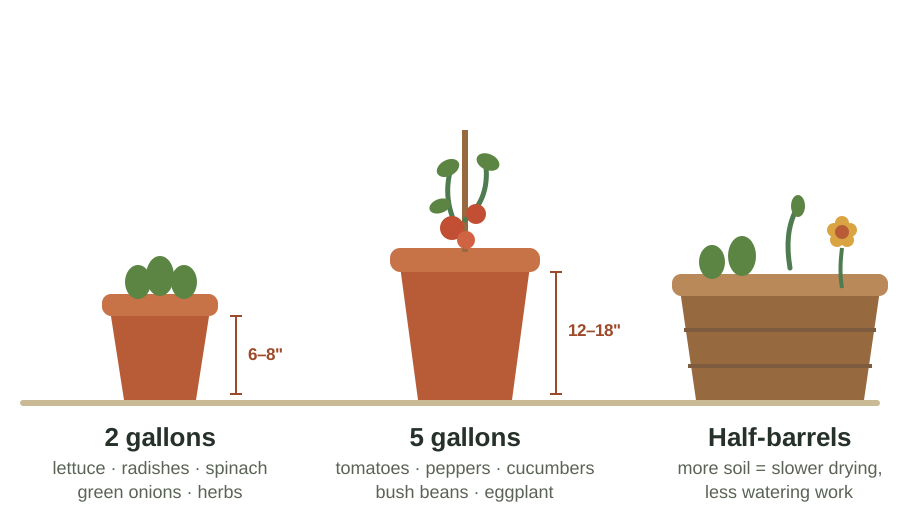
| Crop | Minimum container | Minimum depth |
|---|---|---|
| Leaf lettuce, spinach | 2 gallons | 4–6 inches |
| Radishes | 2 gallons | 6 inches |
| Green onions, chives | 2 gallons | 4–6 inches |
| Swiss chard | 2–3 gallons | 8 inches |
| Basil | 1–2 gallons | 6 inches |
| Parsley | 4–6 gallons | 8 inches |
| Bush beans | 5 gallons | 12 inches |
| Cherry tomato (patio type) | 5 gallons | 12–18 inches |
| Peppers | 5 gallons | 12 inches |
| Bush cucumbers | 5 gallons | 12–18 inches |
A "5-gallon" pot is roughly 12 inches across the top. For other sizes, Illinois Extension's rule of thumb: a 10-inch pot holds about 3 gallons, a 14-inch about 7, a 16-inch about 10, and an 18-inch about 15. Food-safe plastic buckets, half-barrels, and fabric grow bags all count — drill or check for drainage holes first.
Set the garden at your height, not the ground's
This is the part most container guides skip, and it's the whole point for us:
- Benches and tables. A sturdy potting bench, an old table, or a plank across two sawhorses lifts a whole row of pots to counter height. Check that the surface drains, or set pots in saucers.
- Plant stands and rail planters. Tiered stands put small pots at 20–40 inches; deck-rail boxes put herbs and lettuce at hip height with zero floor space.
- Wheels under big pots. A 5-gallon tomato pot full of wet soil is heavy. An inexpensive rolling plant caddy means you chase the sun — not carry it.
- Group your pots. Clustering containers shades their sides, slows evaporation, and puts your whole "garden" within a few steps of one chair.
If you're weighing pots against a permanent setup, our guide to raised bed heights for no-bend gardening covers when a waist-high bed earns its price — and when a bench of containers does the same job for less.
The honest part: watering
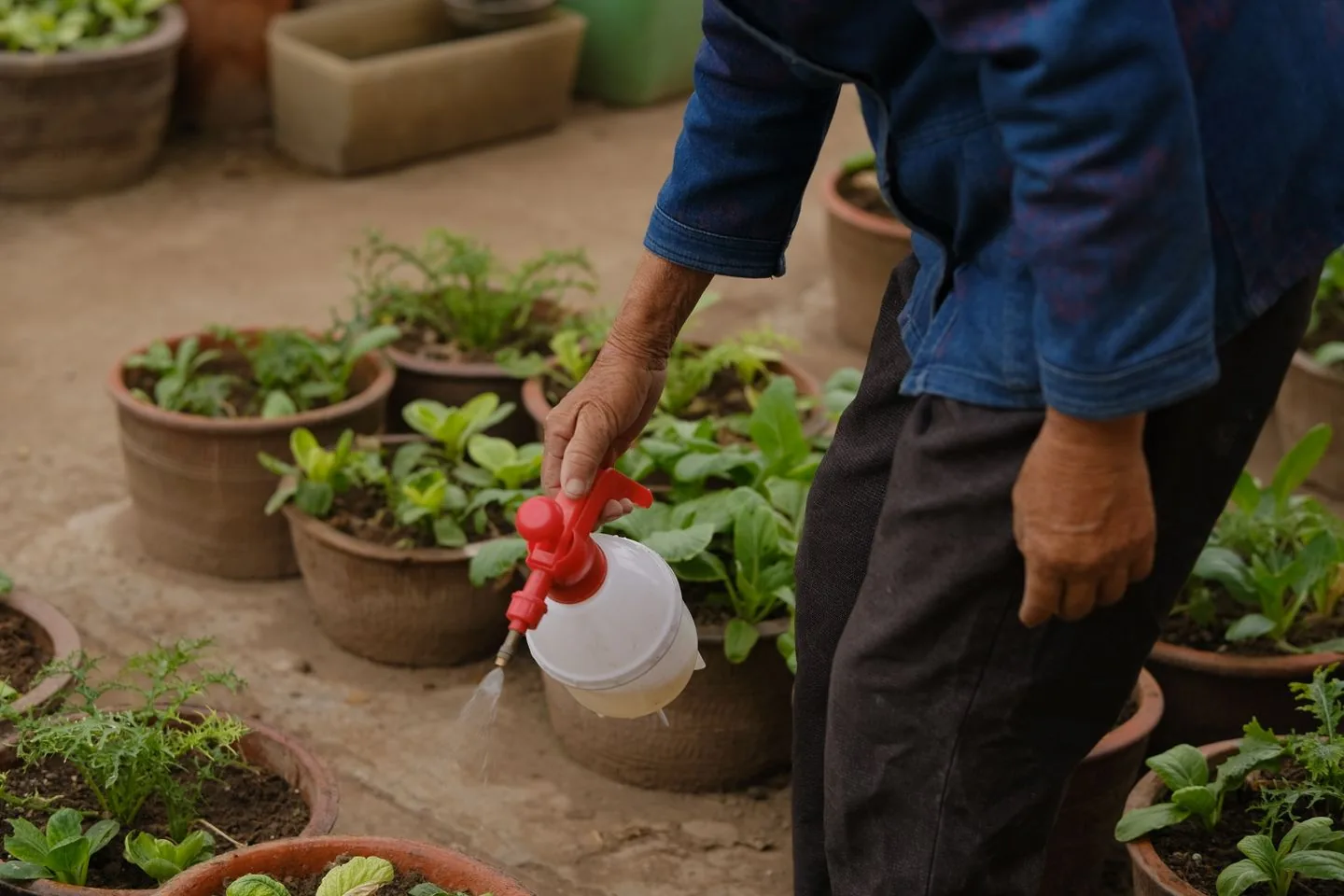
Pots in July sun may need water every day. Wisconsin Extension says to expect daily watering once plants are large and fruiting, and the Almanac notes some pots need it twice a day in peak heat. Your levers: choose the bigger pot, mulch the surface with an inch of straw or shredded leaves, group containers, use saucers, or buy self-watering planters (a reservoir in the base lets you skip watering for a few days, as University of Maryland Extension puts it). A watering wand with a shut-off valve saves both stretching and trips.
Planning a second act for your pots? Many of these crops re-sow beautifully in late summer — see what to plant in August for a fall garden.
Sketch your pot lineup first
The free Printable Garden Planner Kit includes a container-planning page, a planting chart, and frost-date tables — all in large, readable print (14-point body text).
Frequently asked questions
What size pot do I need for tomatoes?
Five gallons is the working minimum for a patio or bush tomato — about 12 inches across and deep. Bigger (10–15 gallons) is even easier because it dries out more slowly. For full-size tomatoes, University of Maryland Extension recommends at least 8–10 gallons, one plant per pot.
Do container vegetables need drainage holes?
Absolutely — no exceptions. And skip the old advice about a layer of rocks in the bottom; extension research shows it actually hinders drainage. Holes plus quality potting mix are all the drainage a pot needs.
Can I use garden soil in containers?
No. Garden soil compacts in pots, drains poorly, and can carry diseases and weed seeds. Use a bagged potting mix (look for "container" or "potting" on the label, ideally pasteurized).
Which container vegetable grows fastest?
Radishes — fast varieties like 'Cherry Belle' are ready in about 3 weeks, most in 4–5. Leaf lettuce and arugula follow at 4–6 weeks for baby leaves. Green onions from sets give you snippable tops within weeks too.
How can I water pots less often?
Use the biggest containers you can, mulch the soil surface, group pots together, keep saucers under them, and consider self-watering planters. Morning watering also loses less to evaporation than midday.
Sources
- University of Wisconsin Horticulture Extension — Growing Vegetables in Containers
- The Old Farmer's Almanac — Vegetable Container Gardening for Beginners
- University of Maryland Extension — Types of Containers for Growing Vegetables
- University of Wisconsin Horticulture Extension — Vegetable Varieties for Containers
- University of Illinois Extension — Small-Space Containers for New Gardeners
- University of Tennessee Extension — Building and Using Raised Beds (W346-E)