This calendar walks the Zone 6 year month by month. Every date below is a typical range, not a promise — Zone 6 stretches across half the country, and a valley in 6a can run two weeks behind a city rooftop in 6b. Look up your exact frost dates by ZIP code once (the free Old Farmer's Almanac tool), pencil them in, and shift our ranges to match. How the whole frost-date system works is in our one-chart planting guide.
Zone 6 at a glance
| Fact | Typical for Zone 6 |
|---|---|
| Winter low | −10 to 0°F (6a: −10…−5, 6b: −5…0) |
| Average last spring frost | Mid-April to early May (colder pockets: mid-May) |
| Safe date for tomatoes & tender crops | About May 15 |
| Average first fall frost | Mid-October to early November |
| Frost-free season | ~170–180 days |
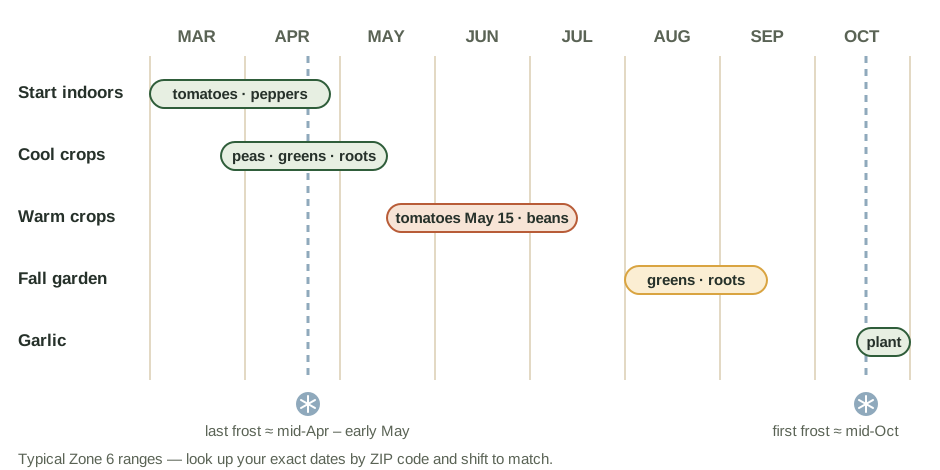
March — the year starts on the windowsill
- Start indoors: tomatoes and peppers in mid-to-late March (6–8 weeks before their mid-May planting date), plus broccoli, cabbage, and head lettuce.
- Direct sow (late March, warm pockets): peas and spinach can go into workable soil 4–6 weeks before the last frost — in much of Zone 6 that's the last week of March. Raised beds and containers drain and warm earlier than open ground, often buying a one-to-two-week head start.
- Onion sets can go in as soon as the soil crumbles instead of smearing.
April — the cool-season month
- Direct sow all month: lettuce, radishes, carrots, beets, kale, chard, turnips, arugula.
- Transplant mid-April: broccoli and cabbage seedlings — they shrug off light frosts.
- Plant potatoes mid-to-late April, about 2–4 weeks before the last frost.
- The Zone 6 trap: false spring. Nearly every year a run of 75°F April days tempts gardeners to set out tomatoes. Nearly every year early May answers with one last frosty night. Let the soil thermometer and the calendar outvote the weather app.
May — the handoff
- Frost danger fades between May 1 and May 15 depending on your spot.
- Direct sow after your last frost: bush and pole beans, sweet corn, cucumbers, summer squash — once soil hits 60°F.
- Transplant tomatoes around May 15, when nights hold above 50°F; peppers and eggplant prefer the last week of May.
- Mulch everything after planting — it locks in spring moisture and saves summer weeding.
June — fill every gap
- Finish planting warm-season crops by mid-June: melons, winter squash, and sweet potato slips (choose short-season varieties — Zone 6 gives them just enough runway).
- Re-sow lettuce in afternoon shade every two weeks for a steady supply.
- Okra is a maybe in Zone 6 — it works in a hot summer with an early variety, but don't bet the bed on it.
July — think fall while it's hot
- Sow the last round of bush beans by mid-July (50–55-day varieties finish comfortably before frost).
- Start fall broccoli and cabbage seed in trays in a shaded spot mid-month for August transplanting.
- Order fall seeds now — spinach and lettuce racks empty out by September.
August — the second spring
Zone 6's fall window is generous: greens, roots, and brassicas sown in August mature in crisp October weather and often taste sweeter for it. Beets and carrots want the first half of the month; lettuce, spinach, radishes, and Asian greens work all month. We keep a full zone-by-zone guide to this window in What to Plant in August for a Fall Garden.
September — stretch the season
- Sow spinach early in the month — harvest baby leaves in fall, then let it overwinter under leaves for the earliest spring greens you'll ever cut.
- Last call for radishes and quick lettuce in the first week.
- Spread compost or shredded leaves on finished beds; October-you will be grateful.
October — garlic month
- Plant garlic mid-to-late October — around or just after your first frost, 4–6 weeks before the ground freezes, per the Old Farmer's Almanac. Cloves root through November and explode out of the gate in March. Depth, spacing, and the no-bend method: our garlic planting guide.
- Keep row covers or old bed sheets handy: the first frost is often followed by two mild weeks, and covered kale, carrots, and lettuce cruise right through.
The no-bend adjustments for Zone 6
Everything above works at ground level — and works better at waist level:
- Containers warm faster than any garden bed. A dark 5-gallon pot in April sun hits sowing temperature a week or two before open soil, which effectively stretches Zone 6's season on both ends.
- Raised beds drain spring mud. March peas in a raised bed mean no kneeling in cold muck — sow standing, from the edge.
- August sowings need daily water for a week — far more pleasant at counter height than at ankle height.
New to either? Start with our raised bed height guide and the container vegetable guide.
Put your Zone 6 dates on paper
The free Printable Garden Planner Kit includes a fill-in planting calendar, frost-date tables for zones 3–10, bed grids, and seasonal checklists — all in large, readable print.
Frequently asked questions
When should I plant tomatoes in Zone 6?
Set transplants out in mid-to-late May — around May 15 for most of the zone — once nights stay above 50°F and soil reaches 60°F. Start seeds indoors in mid-to-late March, 6–8 weeks earlier. Planting into cold soil earlier gains nothing; the plants just sulk.
When do I start seeds indoors in Zone 6?
Count back from the outdoor date: tomatoes 6–8 weeks (mid-late March), peppers and eggplant about 8 weeks (mid-March), broccoli and cabbage 4–6 weeks before their mid-April transplanting (early March). Later is safer than earlier — leggy, root-bound seedlings never quite recover.
When can I plant potatoes in Zone 6?
Mid-to-late April, about 2–4 weeks before the last frost. The old-timers' rule of planting "around tax day" lands remarkably close for most of the zone.
What's the difference between Zone 6a and 6b?
Five degrees of average winter minimum: 6a bottoms out at −10…−5°F, 6b at −5…0°F. That matters for which perennials and fruit trees survive winter; for the vegetable calendar the difference is small — 6b springs run about a week ahead of 6a. Note that the USDA redrew the map in 2023 and many gardens shifted a half-zone warmer, so re-check yours.
When should I plant garlic in Zone 6?
Mid-to-late October — after the first frost, 4–6 weeks before the ground freezes, and into early November if the soil is still workable. Planted too early it sprouts tall before winter; too late it can't root. October's sweet spot solves both.